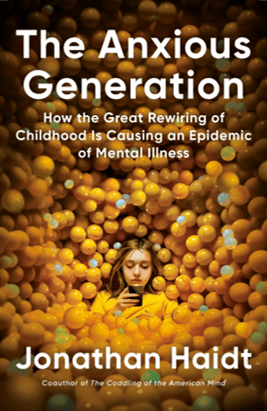
In 2024, Jonathan Haidt’s The Anxious Generation revealed some uncomfortable truths about contemporary childhood. The book’s central argument is that children have been ‘overprotected in the real world, and under-protected online’, resulting in huge mental health problems alongside a host of other issues.
We’ve all seen the amazing changes happening around the world since its publication: smartphones have been banned in many schools, and many countries have moved to restrict them entirely for under 16s, in line with Haidt’s recommendations.
But what about the first part of the thesis – the fact that kids have been ‘overprotected in the real world’?
This is just as important as the part about phones.
Haidt’s argument here largely concerns play. He explains how free play is essential for developing resilience, social skills, creativity, and mental wellbeing. He describes how play isn’t a nice-to-have, but is actually a critical developmental mechanism, essential for growing up into a healthy human being.
He then shows how children’s access to play has drastically declined over the past few decades, largely as a result of children in anglophone countries no longer being allowed out without their parents.
As a father of two young children, I began to think about play. I realized how important it was, how much kids need it, and became concerned at how little of it they get at school. Worse, I realized how hard it is to find outside of school.
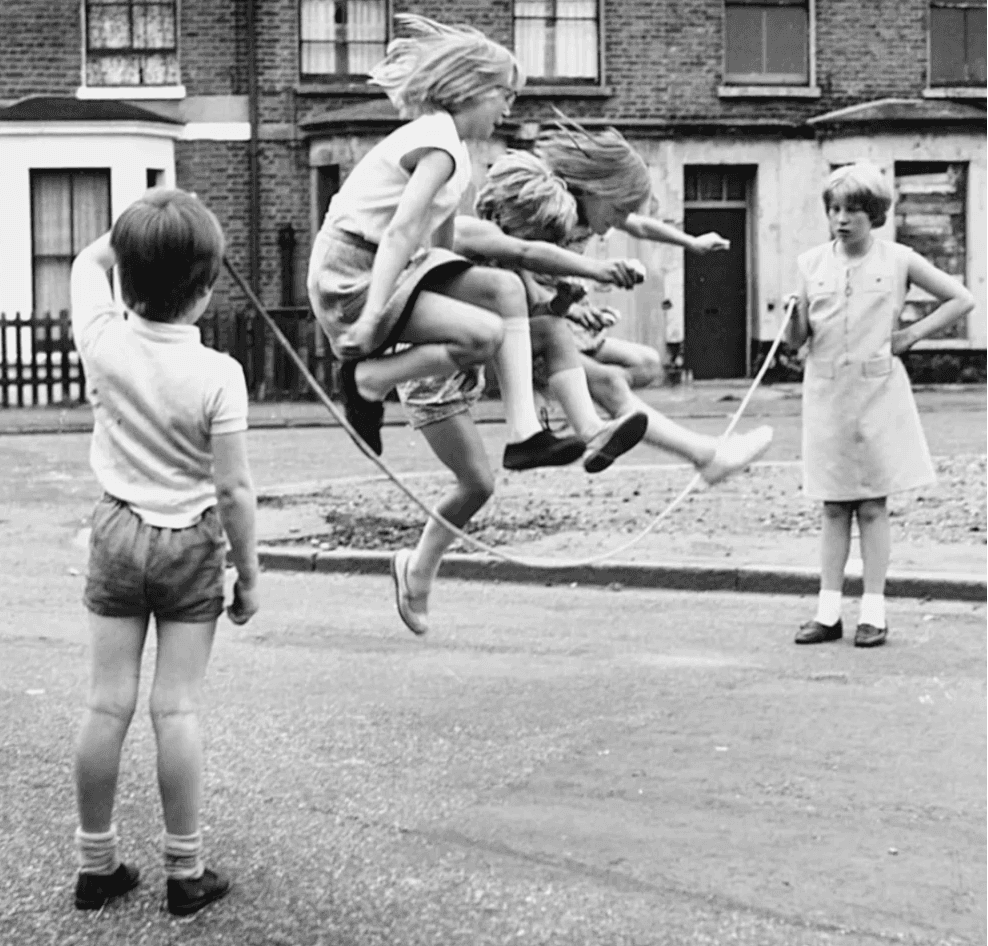
If you define true free play as being social, freely chosen, and lightly supervised – in other words something like a school playground (or any normal street before the 1980s), it became clear that there is almost nowhere in London kids can go to experience it.
You can have a playdate – which is fine, as far as it goes, but it’s generally only two kids – not as social as it could be, and anyway they don’t happen nearly often enough, due to parents’ limited time to organize and supervise. Or you can go to a public playground, but no parent will ever drop off a young child unsupervised. So the parents stay (scrolling their phones), and any time the kids have a disagreement, the parents swoop in, and the children are prevented from actually working it out themselves and learning from it – part of the point of free play. Not to mention that trips to the playground don’t happen often enough either, again, due parents’ limited time.
There are, of course, adventure playgrounds, many of which are wonderful. But half have closed in the past 15 years, and those that remain open are under brutal funding pressures, which generally means very limited opening hours and capacity.
I found this particularly heartbreaking, not because of the books I’d read that explained the psychological and developmental benefits of play, but because play is a child’s deepest desire. If you ask them what they want to do on any given day, top of the list isn’t really the screen or the ice cream. It’s the friend. It’s each other. It’s the one thing they don’t have access to.
So what to do?
We’ve set up Tarlatan to provide exactly this – true free play outside school. It’s somewhere children can go to develop Connection, Curiosity, Confidence, and Creativity, and shelter from Screens, Structure, and close Supervision.
By combining free play with guided activities like art and cooking, children don’t have to choose between pursuing extra-curricular interests and benefitting from play – we provide both in a single session.
Our amazing staff are passionate about their subjects, working with children, and the critical importance of play. They are fully present and available for the kids. There are, of course, no phones. They introduce kids to skills and techniques during guided activities, then keep things appropriately safe during playtime, without controlling or directing. This enables kids the full benefit of play, including taking, and growing from, some appropriate risks.
Tarlatan is a club. And, like all true clubs, the real value is the other members. It’s each other.
In 2024, Jonathan Haidt’s The Anxious Generation revealed some uncomfortable truths about contemporary childhood. The book’s central argument is that children have been ‘overprotected in the real world, and under-protected online’, resulting in huge mental health problems alongside a host of other issues.
We’ve all seen the amazing changes happening around the world since its publication: smartphones have been banned in many schools, and many countries have moved to restrict them entirely for under 16s, in line with Haidt’s recommendations.
But what about the first part of the thesis – the fact that kids have been ‘overprotected in the real world’?
This is just as important as the part about phones.
Haidt’s argument here largely concerns play. He explains how free play is essential for developing resilience, social skills, creativity, and mental wellbeing. He describes how play isn’t a nice-to-have, but is actually a critical developmental mechanism, essential for growing up into a healthy human being.
He then shows how children’s access to play has drastically declined over the past few decades, largely as a result of children in anglophone countries no longer being allowed out without their parents.
As a father of two young children, I began to think about play. I realized how important it was, how much kids need it, and became concerned at how little of it they get at school. Worse, I realized how hard it is to find outside of school.
If you define true free play as being social, freely chosen, and lightly supervised – in other words something like a school playground (or any normal street before the 1980s), it became clear that there is almost nowhere in London kids can go to experience it.
You can have a playdate – which is fine, as far as it goes, but it’s generally only two kids – not as social as it could be, and anyway they don’t happen nearly often enough, due to parents’ limited time to organize and supervise. Or you can go to a public playground, but no parent will ever drop off a young child unsupervised. So the parents stay (scrolling their phones), and any time the kids have a disagreement, the parents swoop in, and the children are prevented from actually working it out themselves and learning from it – part of the point of free play. Not to mention that trips to the playground don’t happen often enough either, again, due parents’ limited time.
There are, of course, adventure playgrounds, many of which are wonderful. But half have closed in the past 15 years, and those that remain open are under brutal funding pressures, which generally means very limited opening hours and capacity.
I found this particularly heartbreaking, not because of the books I’d read that explained the psychological and developmental benefits of play, but because play is a child’s deepest desire. If you ask them what they want to do on any given day, top of the list isn’t really the screen or the ice cream. It’s the friend. It’s each other. It’s the one thing they don’t have access to.
So what to do?
We’ve set up Tarlatan to provide exactly this – true free play outside school. It’s somewhere children can go to develop Connection, Curiosity, Confidence, and Creativity, and shelter from Screens, Structure, and close Supervision.
By combining free play with guided activities like art and cooking, children don’t have to choose between pursuing extra-curricular interests and benefitting from play – we provide both in a single session.
Our amazing staff are passionate about their subjects, working with children, and the critical importance of play. They are fully present and available for the kids. There are, of course, no phones. They introduce kids to skills and techniques during guided activities, then keep things appropriately safe during playtime, without controlling or directing. This enables kids the full benefit of play, including taking, and growing from, some appropriate risks.
Tarlatan is a club. And, like all true clubs, the real value isn’t the premises, or the menu, or the facilities. It’s the other members. It’s each other.